
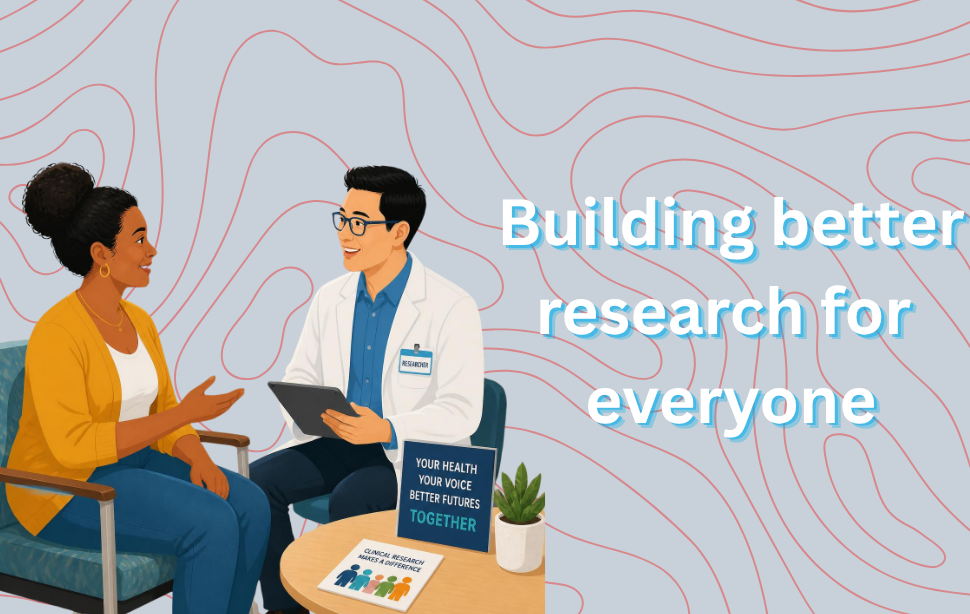
Every July, the mental health community observes Minority Mental Health Awareness Month. Established in 2008 by the U.S. House of Representatives, the recognition honors Bebe Moore Campbell, an author, teacher, and journalist, and her lifelong dedication to mental health equity for underrepresented communities. Mental health issues affect people from every background, and when mental health support, resources, and research are diverse, we can better understand how different populations may experience mental health conditions and respond to investigational products. Through diversity, clinical research can better serve more people, regardless of their background or identity.
What Is Diversity in Clinical Research?
Clinical research aims to advance mental health understanding and support the development of future treatment options for everyone. When research includes participants from diverse backgrounds, research findings can expand, improve, and become accessible to more people. Diversity in clinical research means ensuring that study participants reflect the full range of backgrounds, identities, and experiences found in the broader population. Because people differ in genetics, culture, environment, lifestyle, and lived experiences, including participants from varied communities creates more representative research and helps scientists understand whether investigational treatments perform similarly across different communities. A more diverse research field leads to findings that better serve everyone.
Why It Matters
Mental health conditions affect every community, but experiences can vary widely. According to the American Psychiatric Association, racial and ethnic minority groups encounter significant barriers to accessing high-quality mental health care. These disparities can extend to clinical research, where underrepresentation means fewer insights into how mental health conditions appear and respond to investigational products across populations. Increasing diversity in mental health research helps scientists identify differences in symptoms, effectiveness of investigational products, and access to care. Over time, inclusive research leads to more equitable understanding and better-informed approaches that reflect the needs of all communities
Building Trust
While past studies produced valuable findings, their limited participant diversity often raised questions about data accuracy and generalizability. Over time, clinical research has evolved to prioritize representation and inclusion as essential parts of scientific progress. Increasing diversity strengthens the integrity and relevance of clinical research. When people from many backgrounds participate, researchers can gather data that better reflects the broader population. With more complete and inclusive information, scientists can continue developing investigational products and research approaches that are informed by real-world diversity, strengthening both trust and the quality of future discoveries.
Moving Towards More Inclusive Research
Diversity in clinical research strengthens the foundation of scientific progress by advancing knowledge that benefits all people, regardless of background. Greater representation supports current communities and shapes future discoveries, creating research outcomes that are inclusive and relevant to all populations. Minority Mental Health Awareness Month is an opportunity to recognize the importance of inclusion in research. When inclusion guides mental health research, it drives discoveries that reflect the real world. If you or someone you know is interested in participating in a clinical trial at Redbird Research, visit our page to see if you may qualify.