
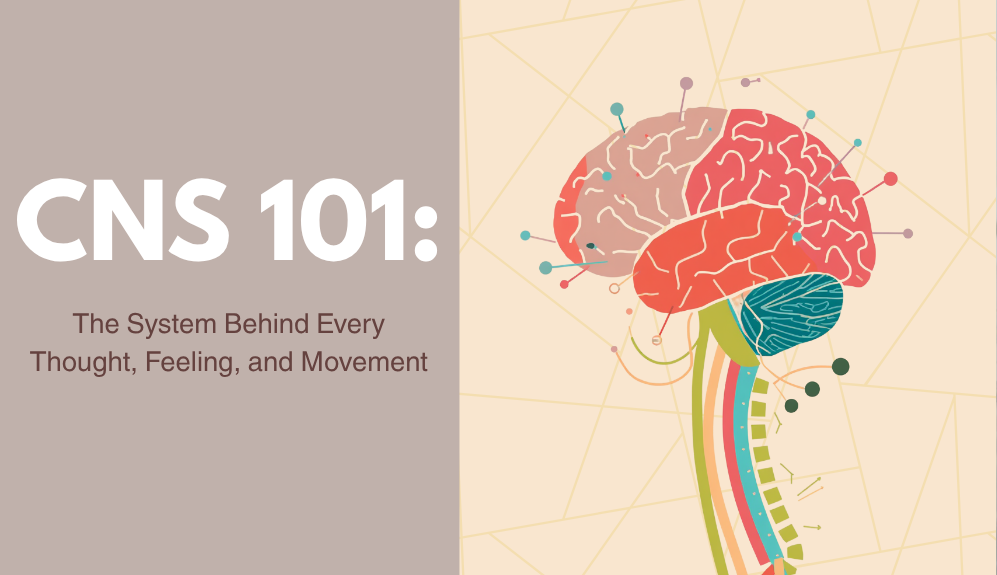
As we move about our everyday lives, we rarely stop to think about how we think, move, and feel. Yet behind every action and feeling is a system working around the clock to keep us responsive. The Central Nervous System (CNS) functions as the foundation for both your physical and mental health. By understanding how the CNS works, we can better appreciate how closely our minds and bodies are connected while also normalizing a vital part of being human.
What is the Central Nervous System?
The Central Nervous System (CNS) is your body’s main command center. It’s made up of two parts: the brain and spinal cord. Together, they are “central” because they process every single piece of information coming from your surroundings and within your body, then tell your body exactly how to react. Working behind the scenes every second, the CNS helps keep the body functioning and responsive to the world.
CNS Functions
According to the Cleveland Clinic, the central nervous system has three main functions: receiving sensory information, processing that information, and responding through action. For example, think about a simple task like walking across a room. Your brain sends an electrical signal down your spinal cord to your leg muscles, telling them to move completing the action of walking.
Beyond physical movement, it also plays a big role in emotions. Feelings like fear, calm, and excitement happen because your brain interprets a situation and tells your body how to feel. The CNS also coordinates intentional actions like speaking and automatic functions like breathing. It’s the bridge that turns what you perceive into how you act.
Why the CNS Matters in Daily Life
When the CNS is functioning properly, daily life feels effortless. Everyday actions like talking and walking happen without a second thought. However, injury, illness, or stress-related changes can affect how efficiently the brain and spinal cord communicate. For example, the National Institute of Neurological Disorders (NINDS) explains that spinal cord injuries can disrupt the transmission of signals between the brain and the spinal cord, leading to changes in movement, sensation, and even bodily functions. Because the CNS regulates both physical mechanics and mental states, any change to the system impacts your overall well-being and quality of life.
The Role of Clinical Research
Because the CNS is one of the most essential systems in the human body, deepening our understanding helps improve how we recognize and treat conditions that affect mood, cognition, behavior, and movement. At Redbird Research, this work is reflected through clinical trials that aim to advance treatment options for psychiatric and central nervous system conditions. These studies contribute to a broader scientific understanding of brain-body interaction while prioritizing participant safety, ethics, and research integrity. Through continued clinical research, we move closer to improving treatment possibilities and deepening our understanding of how the CNS shapes both physical and mental health.